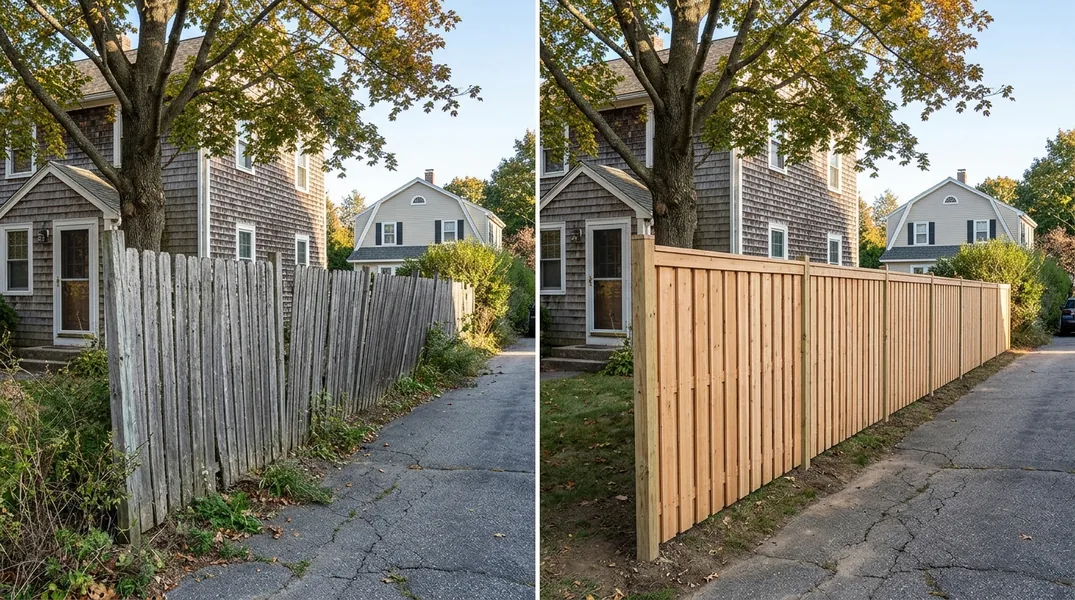
Understanding Boston's Unique Climate Challenges
If you live in Boston or the surrounding areas, you know that our climate is anything but forgiving when it comes to outdoor structures. The combination of salt air from the Atlantic Ocean, intense freeze-thaw cycles during winter, and high humidity creates a perfect storm for fence materials. Between November and March, temperatures regularly dip below freezing, and spring thaws can be equally harsh. The salt spray that travels inland, especially for properties closer to the coast, accelerates corrosion and material degradation in ways that homeowners in milder climates never have to consider.
When you're evaluating Wood & Privacy Fence Installation versus Vinyl & PVC Fence Installation, understanding these environmental stressors is critical. Your fence won't just face aesthetic wear; it will face structural challenges that demand a material capable of withstanding repeated cycles of moisture absorption, freezing, and thawing. This is why choosing the right material isn't just about preference or initial appearance, it's about making an investment that will stand the test of time in our demanding New England environment.
How Wood Fences Perform in Boston's Climate
Wood has been the traditional choice for fencing for centuries, and for good reason. It offers natural beauty, warmth, and character that many homeowners find irreplaceable. However, in Boston's climate, wood requires honest assessment. Wood is naturally porous, meaning it absorbs moisture readily. When winter temperatures drop and that moisture freezes, it expands, creating stress within the wood fibers. This freeze-thaw cycle is one of the primary culprits behind wood fence deterioration in New England. Additionally, the salt air that reaches our region can accelerate wood rot and decay, particularly if the wood isn't properly sealed and maintained.
To keep a wood fence looking good and functioning well in Boston, you'll need to commit to regular maintenance. This typically means staining or sealing every two to three years, inspecting for rot and insect damage annually, and replacing damaged boards as they fail. The good news is that individual boards can be replaced without replacing the entire fence. If you're willing to invest the time and effort into maintenance, a wood fence can last 15 to 20 years or more. For many homeowners who value the aesthetic appeal and don't mind the upkeep, this trade-off is worth it. The key is being realistic about the commitment involved before you install.
Vinyl Fences: The Low-Maintenance Alternative
Vinyl fencing has gained significant popularity over the past two decades, particularly among homeowners seeking a best low maintenance fence option. Vinyl is non-porous, meaning it doesn't absorb water the way wood does. This fundamental difference makes vinyl far more resistant to the freeze-thaw cycles that plague wood fences in Boston winters. Vinyl won't rot, splinter, or develop the soft spots that make wood fences dangerous or unsightly. It also resists salt air corrosion far better than wood, making it an excellent choice for properties anywhere in the greater Boston area.
When it comes to maintenance, vinyl truly shines. You won't need to stain, seal, or paint it. Occasional cleaning with soap and water is typically all that's required to keep it looking fresh. Vinyl doesn't require annual inspections for rot or insect damage. This low-maintenance profile appeals to many homeowners who want a fence that will look good year after year without significant upkeep. However, vinyl does have limitations. It can become brittle in extreme cold, and while it's durable, replacing individual sections is more complicated than replacing a wood board. Additionally, vinyl can fade over time if exposed to intense UV rays, though modern vinyl formulations have improved significantly in this regard.
Vinyl vs Wood Fence Cost in Boston: What to Budget
When comparing pricing for wood versus vinyl, the initial cost is often the first consideration homeowners examine. Generally, wood fencing has a lower upfront cost than vinyl. A basic wood privacy fence might cost anywhere from $15 to $30 per linear foot installed, while vinyl typically ranges from $25 to $45 per linear foot. For a 100-foot fence, this could mean a difference of $1,000 to $1,500 or more in initial installation costs. For budget-conscious homeowners, this price difference can be significant.
However, the true cost of fence ownership extends far beyond the initial installation. When you factor in maintenance costs over the fence's lifetime, the picture changes considerably. A wood fence requires regular staining, sealing, and repairs. Over a 20-year period, these costs can easily total $2,000 to $5,000 or more, depending on the fence's condition and your local labor rates. Vinyl, by contrast, requires minimal maintenance beyond occasional cleaning. While your upfront vinyl investment is higher, your long-term cost of ownership may actually be lower. For many Boston homeowners, vinyl represents better value when you consider the total cost over the fence's expected lifespan. To get an accurate estimate for your specific property, reach out to Boston Fence for a free estimate.
Durability and Longevity: Which Material Wins in Boston?
Durability in Boston's climate is where the differences between wood and vinyl become most apparent. A well-maintained wood fence might last 15 to 20 years, while vinyl fences often last 25 to 30 years or longer. This extended lifespan is largely due to vinyl's resistance to moisture, rot, insects, and salt air. Vinyl doesn't weaken structurally over time the way wood does. The posts, rails, and pickets maintain their integrity year after year, even through multiple harsh New England winters.
That said, durability depends partly on installation quality. A poorly installed vinyl fence might fail prematurely at connection points or posts. Similarly, a wood fence installed with pressure-treated lumber and proper drainage will outperform one installed with untreated wood. This is why choosing an experienced installer matters tremendously. Boston Fence has been serving homeowners throughout the region with expert installation that maximizes your fence's lifespan, regardless of whether you choose wood or vinyl. If you're ready to explore your options with a professional, call (857) 767-9232 or request a consultation online.
Making Your Decision: Which Fence Material Is Right for You?
Choosing between wood and vinyl ultimately comes down to your priorities, budget, and lifestyle. If you love the natural look of wood, don't mind regular maintenance, and have the budget for ongoing care, a wood fence can be a beautiful and rewarding choice. Many homeowners in Newton, Brookline, and throughout the Boston area choose wood specifically for its aesthetic appeal and the sense of craftsmanship it represents. If you're willing to commit to staining and sealing every few years and addressing repairs promptly, you'll have a fence that looks great and functions well.
If you prefer a low-maintenance solution that will stand up to Boston's harsh winters and salt air with minimal fuss, vinyl is the clear winner. It offers superior durability in our climate, requires virtually no maintenance, and will likely outlast a wood fence by many years. Yes, the upfront cost is higher, but the long-term savings on maintenance and repairs often make it the more economical choice. Both materials can serve you well if installed correctly. The best approach is to evaluate your specific needs, consider your long-term plans for your property, and discuss your options with experienced professionals who understand Boston's unique climate challenges. Contact Boston Fence today at (857) 767-9232 to discuss which material makes sense for your home and get a free estimate for your project.
Looking for a professional fence contractor in Boston? Boston Fence responds fast for all your fence needs.
Get a Free Quote