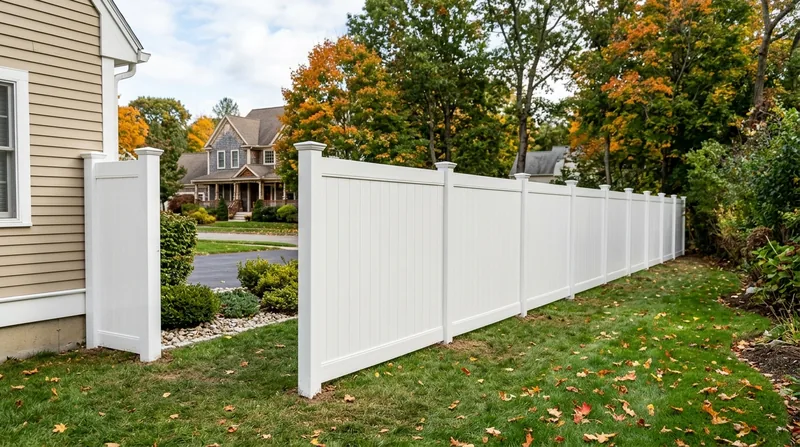




Vinyl & PVC fence installation in Boston offers homeowners a low-maintenance alternative to wood that stands up to the region's harsh winters, salt air, and freeze-thaw cycles. Boston's mix of triple-deckers with tight yards in Dorchester and South Boston, colonials in Newton and Wellesley, and rowhouses in Beacon Hill all benefit from vinyl's durability and clean appearance. Unlike wood, vinyl doesn't rot, warp, or splinter when exposed to repeated freezing and thawing, road salt near major streets, or the salt spray that reaches neighborhoods close to the harbor. A properly installed vinyl fence with concrete-set posts and correct spacing will hold its line for 20 years or more without staining, restoration, or seasonal maintenance. We build vinyl fences that manufacturers back, installed to code, with honest guidance on where vinyl makes sense and where cedar or pressure-treated wood remains the better choice.
Why Vinyl Fencing Matters in Boston's Climate and Terrain
Boston winters bring repeated freeze-thaw cycles that heave fence posts and crack wood rails. Salt trucks spread road salt on every major street, and nor'easters dump wet, heavy snow that pushes against fence lines with real force. Vinyl doesn't absorb moisture, so it won't swell, shrink, or rot at the post line where wood fails first. The rocky glacial till under most Boston yards also means post holes often hit ledge or buried boulders, requiring careful drilling and concrete footings set deep to hold against winter heave and wind load.
- Vinyl resists salt air and road salt without corrosion or discoloration, unlike galvanized fasteners on wood fences.
- Posts set in concrete footings prevent frost heave that lifts and tilts wood posts out of plumb every winter.
- No painting, staining, or seasonal sealing needed, which saves time and money over the fence's life.
- Vinyl panels come in white, tan, and grey, matching suburban colonial and ranch neighborhoods across the metro area.
- Damage to a single rail or picket can be replaced without rebuilding the whole fence section.
Vinyl's main trade-off is cost at installation and limited repair options if a post or panel fails, but in Boston's unforgiving climate, the low maintenance and durability justify the upfront spend for most homeowners.
Key info: Freeze-thaw heave is the number-one fence failure in Boston. Posts set only in tamped soil rise 2 to 4 inches over three winters. Concrete footings below the frost line (typically 48 inches in Greater Boston) keep vinyl and wood posts stable year-round. See our fence post repair guide for details on diagnosing heave damage.
For official fence height and material rules in your neighborhood, check the Boston Inspectional Services Department, or contact your local building department in Brookline, Newton, Milton, or other surrounding towns, since setback and height limits vary by jurisdiction.
How We Install Vinyl & PVC Fences in Boston: Process and Standards
A vinyl fence installation starts with a site walk to locate utilities, identify ledge or difficult soil, and confirm property lines with the homeowner's existing survey. We then call 811 for a free utility locate (required by Massachusetts law before any digging), mark post locations on 6-foot or 8-foot centers depending on panel size and wind exposure, and drill or auger post holes deep enough to set concrete below the frost line. Posts are set plumb in concrete, allowed to cure, then vinyl panels and rails are assembled and attached per manufacturer specs. The result is a fence that won't rack, sag, or lean as seasons change.
- We locate your property line and verify setbacks with your deed or survey before marking post locations.
- Call 811 for utility locates before digging any post hole, as required by state law.
- Drill post holes below the frost line (typically 48 inches in Boston) and set posts in concrete to prevent heave.
- Assemble vinyl panels and rails on-site, checking for plumb and level as we go.
- Install caps and trim to seal the top of posts and prevent water entry into the post cavity.
- Walk the line with you at completion and explain care and warranty details.
This methodical approach takes longer than shortcuts like tamped posts or above-ground installation, but it's the only way to build a fence that survives Boston winters without settling or leaning.
Example: A vinyl privacy fence in a Wellesley backyard with ledge 36 inches down requires a drill or rock auger to break through, and then a deeper post hole to get below frost. The same fence on sandy soil near Weymouth goes faster, but both get the same concrete footing standard. We quote both scenarios honestly so you know what the site conditions mean for your timeline and cost.
Learn more about vinyl and PVC gates to complete your yard enclosure.
| Approach | Description | Best for |
|---|---|---|
| Vinyl Privacy Panels | Solid 6-foot or 8-foot panels with 4x4 posts set in concrete, vinyl rails and post caps, no gaps between pickets. | Backyards in triple-deckers and colonials where privacy and low maintenance are priorities. |
| Vinyl Picket Fencing | 4-foot or 5-foot pickets spaced 1 to 2 inches apart on 2x4 rails, white or tan, classic New England look. | Front yards of colonials in Newton, Needham, and Wellesley; meets HOA standards and adds curb appeal. |
| Vinyl Ranch Rail | Two or three 2x4 vinyl rails between posts, open design, natural aesthetic, typically 4 to 5 feet tall. | Larger residential lots in Milton, Dedham, and outer suburbs where a split-rail look is preferred without wood rot. |
| Vinyl Racked Installation | Panels installed at an angle to follow sloped terrain, maintaining consistent picket spacing on hilly sites. | Backyards on the drumlins and glacial hills that define Boston neighborhoods like Jamaica Plain and Roslindale. |
Vinyl & PVC Fence Installation Cost in Boston: What to Expect
Vinyl fence installation in Boston starts at $38 per linear foot for basic privacy paneling on level ground with easy soil. A typical backyard fence of 100 linear feet runs $3,800 to $5,500 depending on panel height, post spacing, and whether ledge or difficult terrain adds drilling time. Racked installation on slopes costs more because panels must be cut and fitted to follow grade. Site conditions drive cost more than anything else: easy sandy soil near the shore goes faster than rocky glacial till in Newton or Brookline, where a drill rig or rock auger becomes necessary.
Factors that move the price up include:
- Ledge or buried boulders under the yard require drilling or rock extraction before concrete footings can be set.
- Steep slopes or racked terrain add labor and material cost because panels must be cut and fitted to grade.
- Mature trees, shrubs, or structures near the fence line require careful post placement and may limit access for equipment.
- Existing fencing that must be removed before new installation adds labor and disposal cost.
- Vinyl height over 6 feet, thicker gauge material, or specialty colors (tan, grey) cost more than standard white 6-foot panels.
Getting two or three estimates from different installers gives you a clear picture of what the site conditions mean for your budget. See our full pricing overview for detailed breakdowns by fence type and material.
What to Look for When Hiring a Vinyl Fence Contractor Near Me in Boston
Finding the right vinyl fence contractor starts with checking insurance and understanding how fence licensing works in Massachusetts. Always verify permit requirements with your local building department before work begins, and check HOA architectural standards if your property is in a master-planned community, since many restrict fence height, material, and color. Get multiple estimates in writing, ask for references from recent jobs in your neighborhood, and confirm that the contractor carries general liability and workers' compensation insurance with a certificate available on request.
- Confirm that general liability and workers' compensation insurance cover the job, with a certificate of insurance provided before work starts.
- Ask for at least three references from residential fence installations completed in the past two years, ideally in your town or nearby.
- Check your city or town building department website for permit requirements, setback rules, and height limits specific to your address.
- Review HOA architectural guidelines if you live in a restricted community, and get written approval before installation begins.
- Request a written estimate that breaks down labor, materials, and site-specific factors like ledge drilling or tree removal.
- Ask whether the contractor will call 811 for utility locates and handle the coordination, as required by state law.
A contractor who takes time to understand your site, explains what the terrain means for cost and timeline, and answers your questions in plain language is usually worth the conversation. Contact us for a free estimate and we'll walk through what we find and what it means for your project.
Ready to get started? Call (857) 767-9232 for a free estimate. We respond within 24 hours and provide honest guidance on whether vinyl, wood, or another material makes sense for your yard and budget. No obligation, no pressure. We serve Boston, Quincy, Newton, Brookline, Milton, Dedham, Needham, Wellesley, and surrounding towns.
Vinyl & PVC Fence Installation in Boston: Pricing Guide
| Service | Price | Details |
|---|---|---|
| Vinyl Privacy Fence | Starting at $38/ft | 6-foot panels, 4x4 posts set in concrete, basic white color, level ground with accessible soil |
| Vinyl Picket Fencing | Starting at $32/ft | 4-foot or 5-foot pickets, 2x4 rails, white or tan, front-yard curb appeal and HOA compliance |
| Ledge Drilling and Rock Removal | On estimate | Frozen glacial till and buried boulders require drilling or auger work, cost varies by depth and density |
| Racked Installation on Slopes | On estimate | Panels fitted to terrain on Boston's drumlins and hills, labor and material increase with grade change |
| Travel | Included | No mileage fee or travel charge within Boston and surrounding service areas |
| Free Estimate | Free | 24-hour response, site walk, written quote with no obligation to book, call (857) 767-9232 |
Indicative pricing, the exact cost depends on square footage, finish, and site access. Free personalized estimate within 24h at (857) 767-9232.


