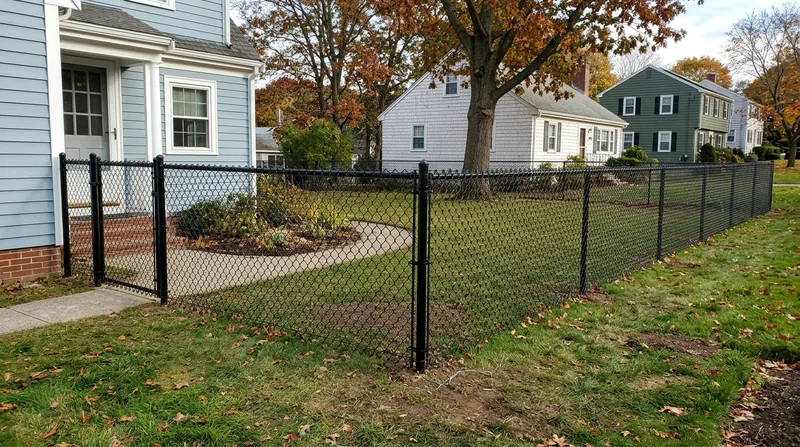




Chain link fence installation in Boston demands more than just stretching mesh between posts. The rocky glacial till, deep winter frost, and nor'easters that bury fence lines mean your chain link has to be built right from the start: correct gauge, properly tensioned, and braced at corners so it stays tight through freeze-thaw cycles and salt air. We install galvanized and black vinyl-coated chain link for yards, alleys, pets, and commercial lots across Boston, Brookline, Newton, and the South Shore. Whether you need a tough perimeter for a triple-decker yard in Dorchester, a pet enclosure in Wellesley, or commercial fencing in Milton, chain link delivers the best durability per dollar when installed with the right tension, gauge, and concrete-set posts.
Why Chain Link Fence Installation Matters in Boston's Dense Neighborhoods
Boston's mix of tight triple-decker lots, narrow alleyways, and postage-stamp backyards makes chain link the practical choice for countless homeowners. Unlike wood privacy fencing, which rots at the ground line and needs regular staining, or vinyl, which carries a higher upfront cost, chain link holds up through decades of salt spray, freeze-thaw heave, and rough weather. The key is starting with the right gauge (11-gauge for residential, 9-gauge for high-traffic or commercial), proper mesh tensioning, and posts set deep in concrete to resist the frost heave that lifts posts 2 to 4 inches in bad winters.
- Galvanized steel resists rust in Boston's humid, salt-laden air near the harbor and along major roads treated with winter salt.
- Black vinyl-coated mesh offers a cleaner look and hides the metal underneath, popular in suburban yards from Newton to Needham.
- Posts set in concrete footings 3 to 4 feet deep prevent frost heave and keep the fence line straight through spring thaw.
- Tension bands and stretcher bars hold the mesh tight; loose or sagging chain link looks neglected and fails faster under wind load.
- Corner bracing and anti-sag hardware keep the fence square and prevent the mesh from bellying outward over time.
Proper installation means your fence stays functional and looks tight for 15 to 20 years, even through the worst Boston winters.
Key info: Boston's building code does not require a permit for residential fence installation in most neighborhoods, but setback rules, height limits, and corner-visibility requirements vary by district. Check with your city or town building department before starting, and always call 811 for a free utility locate before digging post holes. Your deed or HOA may also restrict height or material.
For more details on fence regulations, visit the City of Boston Inspectional Services website.
How We Install Chain Link Fence in Boston: A Step-by-Step Process
Chain link installation looks simple from the street, but the difference between a fence that stays tight and one that sags or leans is in the details. We start with a site walk to identify utilities, grade changes, and any obstacles, then set posts at proper spacing (typically 5 to 6 feet apart for residential, closer for high-traffic areas). Posts go into holes dug 3 to 4 feet deep, set in concrete, and braced plumb. Once the posts cure, we stretch the mesh tight using tension bands and a stretcher bar, then secure it to the rails with proper fasteners.
- We call 811 to locate buried utilities and mark the fence line so no surprises during digging.
- Posts are dug 3 to 4 feet deep and set in concrete to resist Boston's frost heave and spring thaw movement.
- We measure and cut mesh to fit each section, then tension it evenly so the fence looks straight and stays tight.
- Tension bands and a stretcher bar hold the mesh under proper pressure; loose installation fails within a year or two.
- We install anti-sag bracing at corners and along long runs to keep the fence square against wind and snow load.
- All fasteners are galvanized or stainless steel to resist rust in coastal and road-salt environments.
A properly installed chain link fence handles Boston winters, nor'easters, and salt air without sagging or rusting.
Example: A residential yard in Jamaica Plain with rocky glacial till and a 50-foot run needs posts dug through ledge or around boulders, which may require hand-digging or a jackhammer. We assess site conditions on the estimate walk, account for that labor, and deliver a fence that lasts without cutting corners on depth or concrete.
See our full fence repair service if you have an existing chain link fence that needs tightening or post replacement.
Chain Link Installation Methods and Materials
| Approach | Description | Best for |
|---|---|---|
| Galvanized Steel | Hot-dipped galvanized coating resists rust in humid, salt-laden environments. Standard for residential and commercial work in Boston. | Yards near the harbor, road-salt zones, and any application where budget matters and rust resistance is essential. |
| Black Vinyl-Coated | Galvanized mesh wrapped in black vinyl for a cleaner, modern appearance. Adds cost but hides the metal and improves aesthetics. | Suburban yards in Newton, Needham, Wellesley, and any visible location where appearance matters as much as function. |
| 11-Gauge Residential | Standard thickness for residential yards and pet enclosures. Lighter and less expensive than 9-gauge but strong enough for normal use. | Pet yards, residential backyards in Boston neighborhoods, and alleys where the fence sees moderate traffic or wind. |
| 9-Gauge Commercial | Thicker, stronger mesh rated for high-traffic and commercial use. Resists impact and stays tight longer under heavy abuse. | Commercial lots, dog parks, industrial yards, and any application where durability under stress is the priority. |
| Privacy Slats and Windscreen | Vinyl or fabric inserts woven into the mesh to block sight lines and reduce wind. Add cost and require periodic replacement but improve privacy and aesthetics. | Yards where neighbors are close, triple-deckers in Dorchester or South Boston, and alleys where privacy or wind reduction matters. |
Chain Link Fence Installation Cost in Boston: What to Expect
Chain link fence installation in Boston starts at around $16 per linear foot for basic galvanized residential mesh with posts set in concrete. That baseline covers standard 11-gauge galvanized steel, posts on 5-foot centers, and proper tensioning. The final cost depends on several real-world factors: site conditions (rocky glacial till and ledge can mean hand-digging or jackhammer work), post spacing (narrower spacing for high-traffic or windy areas costs more), gauge and coating (9-gauge commercial or black vinyl-coated mesh runs higher), and extras like privacy slats or anti-sag bracing.
A typical 100-foot residential yard run costs $1,600 to $2,200 depending on terrain and material choices. Alleys in tight Boston neighborhoods may cost more because of access and tight quarters. Commercial applications with 9-gauge mesh, closer post spacing, and heavy-duty bracing run $18 to $25 per linear foot or higher. We recommend getting two or three estimates so you can compare scope, gauge, and labor. Cheap estimates often mean thinner gauge, loose tensioning, or shallow post holes that fail within a few years.
For a detailed breakdown of pricing across our service area, see our full pricing page.
What to Look for When Hiring a Chain Link Fence Contractor Near Me in Boston
Finding the right fence contractor near Boston means checking for insurance, understanding local permit rules, and getting clear references. However, always call your local building department to confirm height limits, setback rules, and any corner-visibility requirements for your neighborhood. If your property is in an HOA or subject to deed restrictions, check those rules before you start, because HOAs often restrict fence height, material, and color.
- Confirm the contractor is fully insured with general liability and workers' compensation coverage, and ask for a certificate of insurance before work starts.
- Call your city or town building department to ask whether a permit is required and whether your deed or HOA imposes restrictions on height or material.
- Ask for references from recent jobs in your neighborhood so you can see how the fence looks and ask how it has held up.
- Get at least two written estimates that specify gauge, post spacing, concrete depth, and the type of tensioning and bracing being used.
- Confirm the contractor will call 811 for a utility locate before digging; this is required by law and protects you and the crew.
- Ask whether the estimate includes cleanup and removal of old fence debris if you are replacing an existing fence.
The right contractor will walk the site, ask about your needs, explain why they chose a particular gauge or method, and stand behind the work with realistic warranty and service terms.
Ready to get started? Contact us for a free estimate or call (857) 767-9232 today.
Chain Link Fence Installation in Boston: Pricing Guide
| Service | Price | Details |
|---|---|---|
| Residential chain link, 11-gauge galvanized | Starting at $16/ft | Posts on 5-foot centers, set in concrete, standard tensioning and fasteners, includes basic site layout |
| Black vinyl-coated residential chain link | Starting at $20/ft | Same as galvanized but with black vinyl coating for appearance; adds material cost and slight labor for careful handling |
| Commercial or high-traffic, 9-gauge galvanized | Starting at $22/ft | Thicker gauge, often closer post spacing (4 feet), anti-sag bracing, and heavy-duty fasteners for durability under stress |
| Privacy slats or windscreen inserts | Add $3 to $6/ft | Vinyl or fabric woven into mesh; improves privacy and reduces wind; requires periodic replacement every 5 to 8 years |
| Site with rocky terrain, ledge, or difficult access | On estimate | Boston's glacial till and buried boulders may require hand-digging, jackhammer work, or creative post placement; assessed on site |
| Estimate and travel | Free | No charge for site visit and written estimate; response within 24 hours at (857) 767-9232, fully insured |
Indicative pricing, the exact cost depends on square footage, finish, and site access. Free personalized estimate within 24h at (857) 767-9232.


