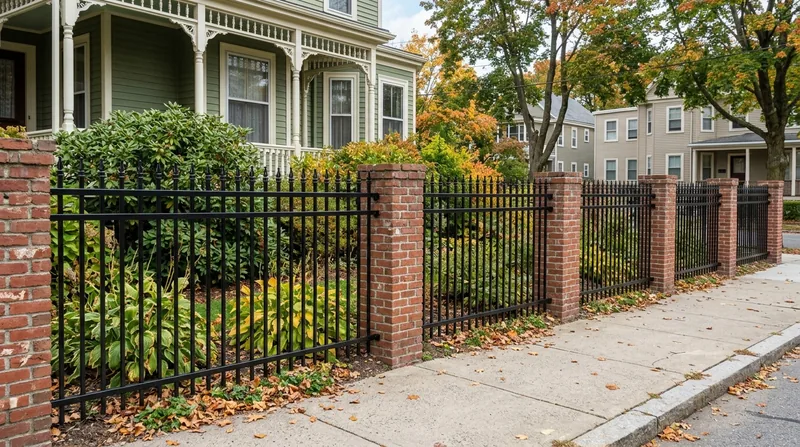




Aluminum fence installation in Boston demands materials and craftsmanship built to survive harbor salt air, repeated freeze-thaw cycles, and the weight of wet nor'easter snow. On Boston's rolling glacial hills, from the triple-decker yards of Dorchester and South Boston to the colonial neighborhoods of Newton and Wellesley, ornamental iron and powder-coated aluminum fencing deliver the clean, rust-resistant look that actually holds up. Unlike wood that rots at the post line or vinyl that becomes brittle in deep New England winters, aluminum and wrought iron panels stay true, their welds stay tight, and their finish resists the corrosion that eats galvanized steel within five years near the harbor. Whether you need a pool barrier that meets code, a front-yard fence that echoes the cast-iron railings of Beacon Hill rowhouses, or a side-yard enclosure on a steep lot that requires racked installation to follow the grade, aluminum and ornamental iron fencing is the choice when durability and appearance matter equally.
Why Aluminum and Ornamental Iron Fencing Makes Sense in Boston's Climate
Boston winters are brutal on metal. Freeze-thaw cycles heave posts, road salt and harbor air corrode fasteners and welds, and gale-force winds push hard on panel faces. Aluminum and wrought iron, when properly installed with posts set in concrete and powder-coated finishes, simply outlast the alternatives. Wood fences rot at the ground line within eight to twelve years; vinyl becomes brittle and fails in impact; chain link rusts through. Aluminum and iron, by contrast, can serve thirty years or more with minimal maintenance.
- Powder-coated aluminum resists salt corrosion far better than bare metal or galvanized finishes.
- Wrought iron panels with proper welds and paint hold their structural integrity through repeated seasonal stress.
- Both materials stay rigid in high wind and heavy snow load, common in Boston nor'easters.
- Posts set in concrete footings, not simply tamped soil, prevent heave and frost damage.
- Ornamental styles echo the architectural heritage of Boston's historic neighborhoods.
These materials require no seasonal treatment, no staining, and minimal repainting over a decade or more.
Key info: Boston's building department and your HOA (if applicable) may restrict fence height, material color, or style in certain neighborhoods. Check with your local authority before design. Deed restrictions in areas like Milton, Wellesley, and Brookline often limit height to 4 feet in front yards and 6 feet on side and rear lines.
For more detail on how permits work in Greater Boston, visit the Boston Inspectional Services Division or contact your town's building department directly.
How We Install Aluminum and Ornamental Iron Fencing on Boston's Hilly Terrain
Boston's landscape is defined by glacial drumlins and bedrock outcrops. Post holes often hit buried boulders or ledge; lots slope steeply; and frost reaches 4 feet below grade. Our process begins with a site visit to identify obstacles, establish the fence line from your existing survey, and determine whether racked installation (stepping the panels down a slope) or stepped installation (adjusting post height) makes sense for your grade. We call 811 for utility locates before digging, set all posts in concrete footings below the frost line, and ensure every weld is clean and every fastener galvanized or stainless steel.
- We locate your property line from your survey and mark the fence run with you before any digging begins.
- We call 811 to locate buried utilities and avoid gas, electric, water and sewer lines.
- We dig post holes below the frost line (typically 42 to 48 inches in Boston) and set posts in concrete.
- We measure and cut aluminum or iron panels to fit your slope, using racked or stepped methods as needed.
- We hang gates with self-closing hardware and test operation before we leave the site.
On a typical residential job in Boston or Brookline, installation takes three to five days depending on lot size and terrain.
Example: A 60-linear-foot aluminum fence along a steep side yard in Jamaica Plain required racked installation to follow the slope. Posts were set 30 inches apart (closer spacing on a slope for rigidity), and panels were cut to step down 3 inches per section. Total job took four days, including concrete curing. See our fence repair service for maintenance and minor damage.
Aluminum vs. Wrought Iron: Installation Methods and Materials
| Approach | Description | Best for |
|---|---|---|
| Powder-Coated Aluminum Panels | Pre-fabricated sections with aluminum pickets and rails, powder-coated finish in black, bronze, white or custom colors. Lightweight, no welding required on site. | Pool barriers, residential front yards, low-maintenance applications. Fast installation, lowest long-term upkeep. |
| Wrought Iron Panels | Hand-forged or fabricated iron with decorative scrolls, spears or pickets. Heavier gauge than aluminum. Painted or powder-coated. May require field welding to posts. | Historic homes, front-yard railings (especially Beacon Hill and Back Bay), properties where classic ornamental style is required by deed or HOA. |
| Ornamental Steel with Aluminum Components | Steel pickets and rails with aluminum posts, or vice versa. Combines strength and corrosion resistance. Requires careful material selection to avoid galvanic corrosion. | Large residential properties, commercial applications, situations where hybrid strength and appearance are needed. |
| Racked Installation on Slopes | Panels cut and stepped to follow grade change, posts set at varying heights. Requires field measurement and custom panel sizing. | Boston's hilly neighborhoods (Jamaica Plain, Roslindale, West Roxbury, Milton). Maintains uniform panel height and clean appearance on uneven terrain. |
Aluminum and Ornamental Iron Fencing Cost in Boston: What to Expect
Aluminum fence installation in Boston starts at around $42 per linear foot for standard residential panels and installation on level ground. Wrought iron or ornamental steel runs higher, typically $55 to $85 per linear foot, depending on design complexity and material gauge. A 60-linear-foot aluminum fence in a Needham or Milton backyard might cost $2,500 to $3,200 installed; a decorative wrought iron front-yard fence in Beacon Hill or Brookline could run $4,500 to $7,000. Cost rises with slope (racked installation requires custom cutting), post depth (if bedrock forces deeper digging), and design (scrollwork and ornament add labor and material).
Always get two or three estimates from local contractors who know Boston's terrain and building codes. A low bid often reflects inexperience with frost heave, slope installation, or permit requirements. Our estimate is free and includes a site visit; call (857) 767-9232 to schedule. See our full pricing page for detailed breakdowns by material and scope.
What to Look for When Hiring an Aluminum and Ornamental Iron Fence Contractor Near Boston
Hiring the right contractor makes the difference between a fence that lasts thirty years and one that fails in ten. Look for a contractor who knows Boston's climate, terrain, and building codes; carries full insurance including workers' compensation coverage; provides a certificate of insurance on request; and can walk you through the permit process for your town. Ask for references from recent jobs in your neighborhood. Verify that the contractor understands your local HOA rules (many Boston suburbs have strict height and material restrictions) and will work from your existing property survey, not guess at the line.
- Confirm the contractor carries general liability and workers' compensation insurance and can provide a certificate.
- Ask whether your town requires a fence permit and who will handle the application and inspections.
- Request references from homeowners in your area and ask about durability and maintenance experience.
- Understand that fence height, setback, and material are governed by your town's zoning code and any HOA architectural review, not contractor preference.
- Get a written estimate that breaks down material cost, labor, post depth, and any site-specific challenges like ledge or slope.
In Massachusetts, fence licensing requirements vary by town and by project cost. Some jurisdictions require a licensed general contractor for projects above a certain threshold (often $40,000); others do not regulate fence work. Check with your town's building department to learn what applies to your property. For a free estimate and guidance on your specific project, contact us or call (857) 767-9232.
Aluminum & Ornamental Iron Fencing in Boston: Pricing Guide
| Service | Price | Details |
|---|---|---|
| Aluminum Fence, Standard Installation | Starting at $42/ft | Pre-fabricated powder-coated aluminum panels, posts set in concrete, level ground. Material and labor included. |
| Wrought Iron or Ornamental Steel Fence | Starting at $55/ft | Hand-forged or decorative steel panels, custom finishes, more labor-intensive installation and field work. |
| Racked or Stepped Installation on Slope | Add $8-$15/ft | Custom panel cutting and post height adjustment required on Boston's hilly terrain, increases labor and material waste. |
| Gate Installation with Hardware | Starting at $400 | Single walk gate with self-closing hinges and latch, installed as part of fence run. Electric operators priced separately. |
| Site Visit and Estimate | Free | Response within 24 hours. Includes terrain assessment, slope measurement, utility locate coordination, and written proposal. |
Indicative pricing, the exact cost depends on square footage, finish, and site access. Free personalized estimate within 24h at (857) 767-9232.


