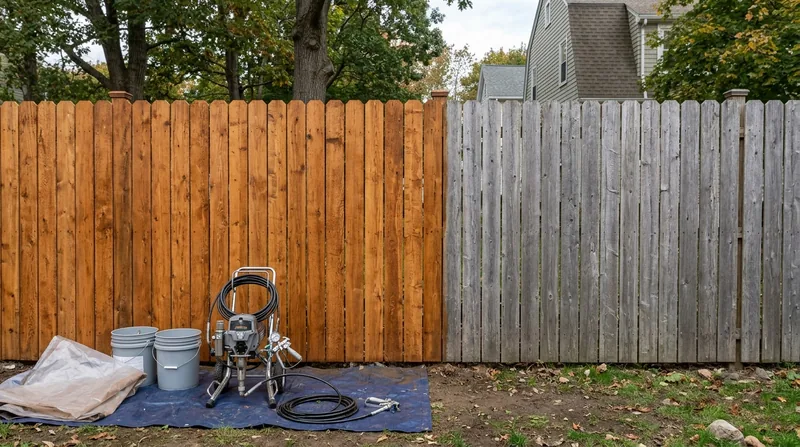




Cedar and pressure-treated pine privacy fences are the backbone of Boston's residential neighborhoods, from the narrow triple-decker yards of Dorchester and South Boston to the larger colonial lots in Newton and Wellesley. Over time, salt air from the harbor, repeated freeze-thaw cycles, humid summers, and nor'easter weather wear the wood gray and open the grain to moisture and rot. Fence staining in Boston is not cosmetic work. Done right, it can double the life of the wood and prevent costly post replacement, but it only works when the wood still has structural integrity. We clean, brighten, and seal cedar fences to protect them through Boston's harsh climate, and we tell you plainly when staining still makes sense and when the wood is past saving.
Why Fence Staining Matters in Boston: Salt Air, Freeze-Thaw, and Wood Preservation
Boston's coastal location, glacial terrain, and extreme seasonal swings create a perfect storm for wood fence failure. Salt spray from the harbor corrodes fasteners and accelerates weathering. Winter freeze-thaw cycles heave posts and crack boards. Spring melt and summer humidity drive moisture deep into the wood, where it feeds rot at the base. A cedar fence that stands unprotected in this climate will gray, splinter, and fail in the posts within eight to twelve years. Sealing the wood with a quality stain slows this process dramatically by repelling water and protecting the grain from UV breakdown.
- Salt air near the harbor and road salt from winter maintenance corrode galvanized fasteners and accelerate wood decay at the ground line.
- Freeze-thaw cycles in Boston winters crack boards, heave posts, and open seams where water enters and sits.
- Humidity and rain soak the wood and feed rot fungi and mold growth that weaken the structure.
- UV exposure grays the wood and breaks down the lignin that holds the fibers together.
- A sealed fence resists all four of these failure modes and extends the life of the wood by years.
Staining is most effective on cedar, which is naturally rot-resistant and accepts stain well. Pressure-treated pine is cheaper but denser and absorbs stain unevenly, so it requires more frequent resealing. The key is starting before the wood begins to rot at the ground line, because once the damage is deep, staining cannot reverse it.
Key info: In Boston neighborhoods like Jamaica Plain, Roslindale, and along the South Shore in Milton and Weymouth, the combination of salt spray and standing water in low-lying yards accelerates fence rot. A staining job done every four to five years on a cedar fence in these areas can prevent the need for full fence replacement for ten years or more.
For more information on the local permitting and regulations that may apply to fence work in your neighborhood, check with your city or town building department. Boston and most surrounding communities do not require permits for routine maintenance staining, but some HOAs and historic districts have approval requirements.
How We Clean, Stain, and Seal Your Fence: The Right Way in Boston
Staining is only as good as the prep work. We start by power washing the fence to remove gray weathering, mold, algae, and built-up dirt. This exposes the true color of the wood and opens the grain so the stain can penetrate. We then inspect every board and post for soft spots, rot, and structural damage. If the wood is sound, we apply a quality penetrating stain that soaks into the fiber rather than sitting on the surface like paint. The stain we use is formulated for New England weather and includes UV blockers and mildew inhibitors to protect against Boston's salt and humidity.
- We power wash at low pressure to avoid damaging the wood fibers and creating splinters or grain raising.
- We inspect the fence line for soft posts, rotted boards, and loose fasteners that need repair before staining.
- We apply stain in two coats to ensure even penetration and lasting protection against moisture and UV.
- We work around landscaping and property features carefully to avoid overspray and damage to nearby plants.
- We remove tarps and clean up all debris on the same day the work is complete.
The entire process takes one to three days depending on fence length and condition. A typical residential fence in Boston runs 100 to 200 linear feet, so we can often complete the job in a single day if the wood is in good shape. If we find rotted posts or damaged boards, we quote those repairs separately and prioritize them before staining, because sealing rotted wood traps moisture inside and speeds the decay.
Example: A six-foot cedar privacy fence behind a Brookline colonial, 150 linear feet, with surface weathering and minor mold but sound posts and rails, takes one day to clean and stain. A similar fence in Dedham with two rotted posts and several soft boards takes two days total: one day for post replacement and board repair, one day for cleaning and staining the entire line.
| Approach | Description | Best For |
|---|---|---|
| Power wash and single-coat stain | Light cleaning and one coat of penetrating stain for wood that is structurally sound and recently stained. | Maintenance refresh every five to seven years on well-maintained cedar fences. |
| Power wash and two-coat stain | Deep cleaning to remove weathering and mold, then two coats of stain for full penetration and lasting color. | Gray cedar or pressure-treated pine fences that have not been sealed in three to five years. |
| Stain with board or post replacement | Replace one or more damaged boards or posts, then clean and stain the entire fence for uniform appearance. | Fences with isolated rot, soft spots, or storm damage where the rest of the structure is sound. |
| Full restoration with structural repair | Replace multiple posts, re-brace sagging sections, repair or replace rails, then clean and stain. | Older fences in Charlestown, Back Bay, or South End that have settled and weathered but the line is worth saving. |
Fence Staining and Restoration Cost in Boston: What to Expect
Fence staining in Boston starts at around $950 for a small residential project, typically 75 to 100 linear feet of cedar privacy fence with no structural repairs needed. The cost rises with fence length, wood condition, and the complexity of the site. A longer fence, pressure-treated pine (which requires more prep and often a primer), or a fence with multiple rotted posts or boards will cost more because the work takes longer and may require materials beyond stain. Access matters too: a fence on a steep slope in the West Roxbury hills or tucked behind a narrow triple-decker in Jamaica Plain takes more time to work safely than a straight run on level ground.
Most residential fences in the Boston area run 150 to 200 linear feet, so budget $1,400 to $2,200 for a thorough cleaning and two-coat stain with no major repairs. If your fence needs post replacement or board repair, add $200 to $500 per post or section, depending on the damage and the wood species. The best way to know your actual cost is to get a free, no-obligation estimate from a contractor who will walk the line with you and explain what they see.
Staining every four to five years costs far less than replacing a fence. A fence that fails and needs full replacement runs $3,000 to $8,000 or more depending on material and length. Regular staining extends the life of the wood and keeps you out of the replacement cost zone. Check our pricing page for more detail on how fence length, wood type, and repairs affect the final bill.
Hiring a Fence Contractor Near Me: What Boston Homeowners Should Know
When you are ready to stain or restore your fence, take time to choose the right contractor. Look for someone who is fully insured with general liability and workers' compensation coverage, and ask for a certificate of insurance before work begins. What matters is a contractor who inspects your fence honestly, explains what is worth saving and what needs replacement, and does not oversell unnecessary work. Ask for references from recent jobs in your neighborhood, and get at least two estimates so you can compare scope and price.
- Confirm that the contractor carries general liability and workers' compensation insurance and can provide a certificate on request.
- Ask whether your city or town requires a permit for staining work, and check with your building department or HOA if you live in a historic district or master-planned community.
- Request references from homeowners with similar fences in Boston, Quincy, Newton, or Brookline so you can see finished work.
- Get a detailed written estimate that breaks out the linear footage, stain type, prep work, and any repairs, so you know exactly what you are paying for.
- Verify that the contractor will power wash safely without damaging the wood and will dispose of all debris and tarps on the same day.
If your fence is in an HOA community or a historic district, check the architectural guidelines before you choose a stain color. Some communities restrict colors to natural wood tones or require approval before any exterior work. A good contractor will ask these questions up front and help you navigate the rules. When you are ready to move forward, contact us for a free estimate at (857) 767-9232. We will walk your fence line, answer your questions, and give you a clear price with no obligation to book.
Fence Staining & Restoration in Boston: Pricing Guide
| Service | Price | Details |
|---|---|---|
| Small residential stain and seal | Starting at $950 | Includes power wash, inspection, and two-coat stain for 75 to 100 linear feet of sound cedar or pressure-treated pine. |
| Standard residential stain and seal | Starting at $1,400 | Typical 150 to 200 linear feet of weathered cedar privacy fence with power wash, full inspection, and two-coat stain application. |
| Stain with board or post repair | Starting at $1,900 | Includes stain for standard fence length plus replacement of one to three damaged boards or one corner post set in concrete. |
| Full restoration with multiple repairs | On estimate | Fences requiring multiple post replacements, rail repair, or structural re-bracing need an on-site inspection to determine scope and price. |
| Travel and site access | Included | No separate mileage fee or travel charge within Boston and surrounding service areas including Quincy, Newton, Brookline, and Milton. |
| Free estimate | No charge | Walk your fence line, inspect for damage, discuss options, and provide a written quote with no obligation to book the work. |
Indicative pricing, the exact cost depends on square footage, finish, and site access. Free personalized estimate within 24h at (857) 767-9232.


