Fence Company in Boston, MA: Installation, Repair & Gates
Boston Fence serves homeowners across Boston and the surrounding areas with the full range of fence work: new installation in wood and privacy fence, vinyl, chain link, and aluminum and ornamental iron; fence repair and storm damage repair; and gate installation and automatic driveway systems. We are a local crew, not a national franchise. The same people who estimate your fence are the ones who build it, and we know this soil and this weather.
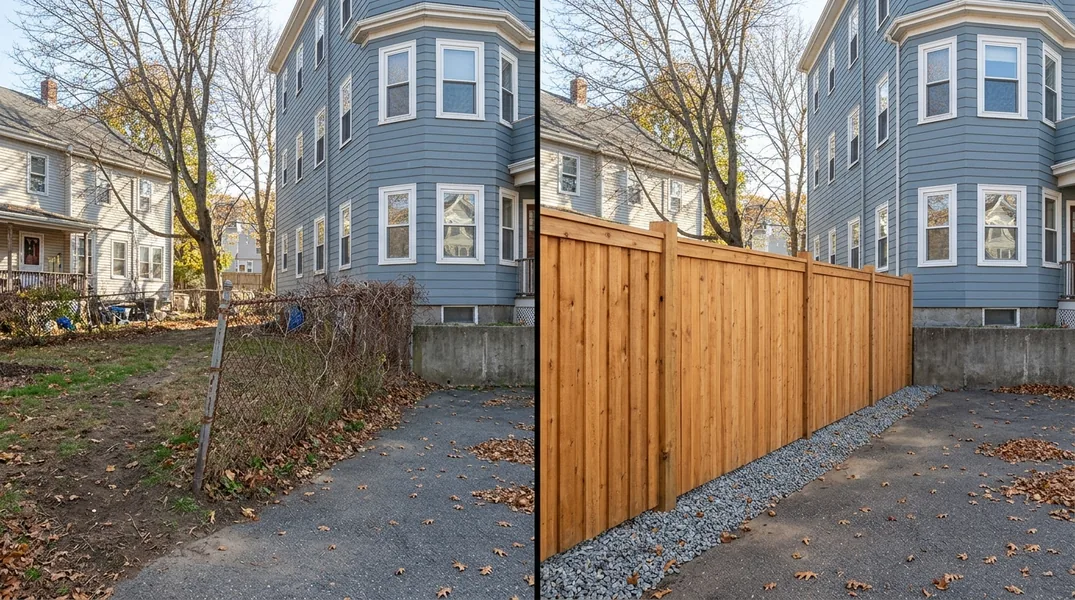
Greater Boston's housing stock is tightly fenced. Triple-deckers in Dorchester and South Boston have small backyards wrapped in white cedar privacy fences. Colonials in Newton, Needham, and Milton sit on modest lots where vinyl and white picket fencing are the standard. Rowhouses in Charlestown and the South End are fronted by cast-iron railings and ornamental gates. Chain link runs property lines in alleys and along driveways. Every neighborhood has its own fence culture, and every fence here faces the same climate: deep winter frost that heaves posts, nor'easters that push whole runs over, salt air that corrodes metal and fasteners, and the rocky glacial till underneath that makes digging hard. When a fence leans or fails here, it is usually a post problem, not a panel problem, and the difference matters for your budget.
Why Fences Lean in Boston: Clay Soil and Rotted Posts
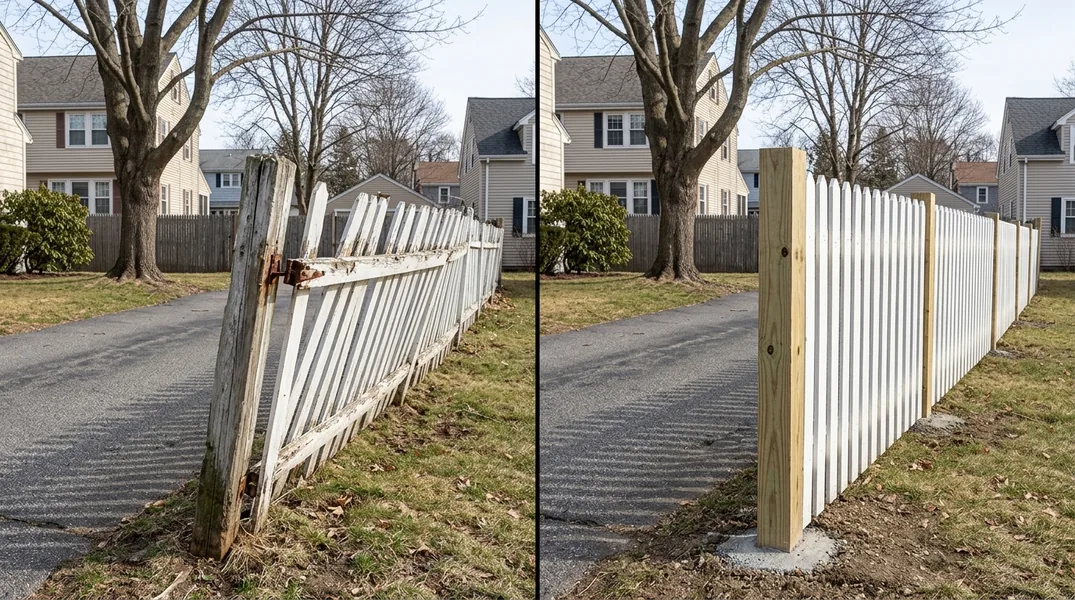
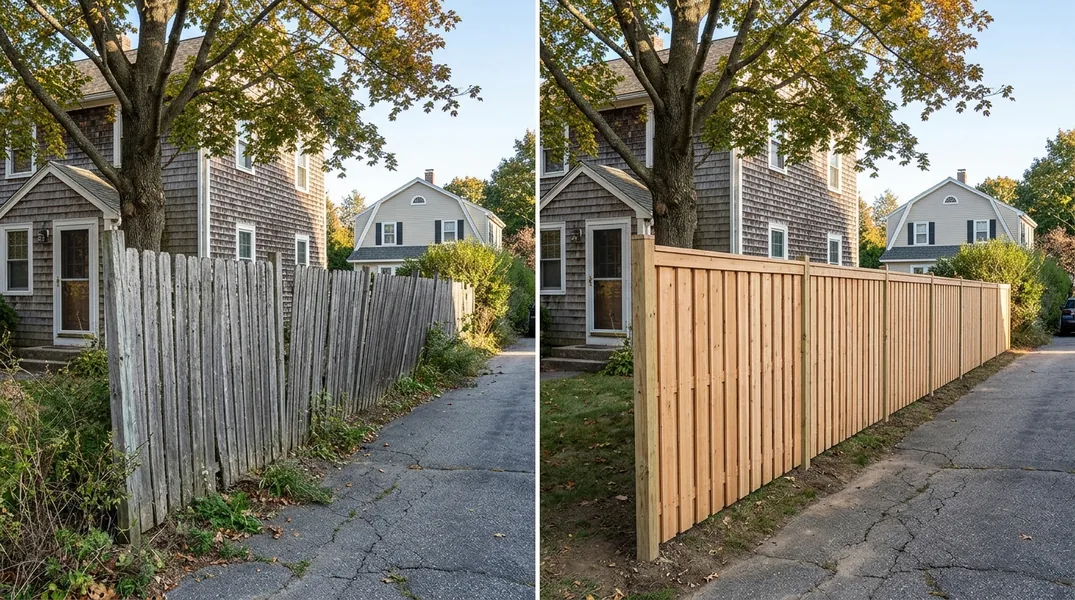
Fences lean in Boston because of the ground and the seasons. The soil here is clay-heavy glacial till that swells when wet and shrinks when dry. A post set in that soil works back and forth with every thaw and freeze, and over three or four winters it racks out of plumb. Worse, the ground line itself is where moisture lives year-round, and that is exactly where wood fails. A fence post that sits in damp soil for ten years will rot at the base while the rest of the wood stays sound. A leaning fence is almost always a post failure, not a sign that the whole fence is done.
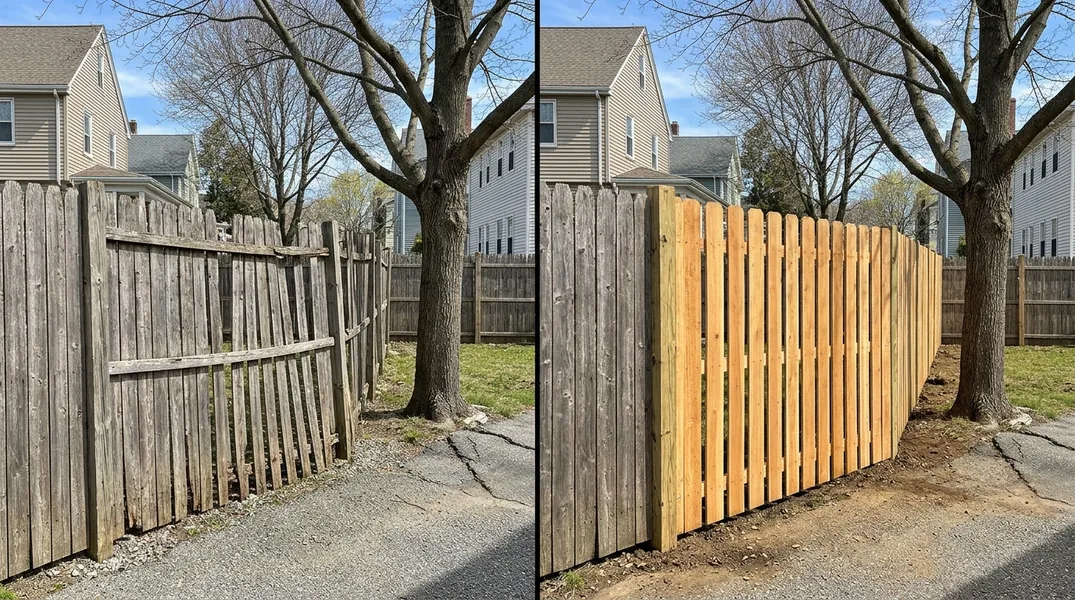
We read a fence line by walking the entire run, not just the section you called about. We test every post, not the one that moved, and we check whether the concrete footing itself has heaved or whether the wood inside it has rotted. That diagnostic work tells us whether the fence is worth repairing or at end of life. A fence with sound pickets and rails and a handful of failed posts is a repair job: we reset or replace those posts, and the rest of the fence stands for years more. A fence where the posts have failed along the whole line, post after post, is past the point of repair, and patching it section by section costs more over five years than replacing it once. We quote both options and tell you which one makes sense. On rotted wood, we replace it. Moisture at the ground line is the cause. We do not perform termite inspections, apply chemical treatments, or carry out pest control, which is a separate regulated trade. If you have concerns about the cause of rot beyond moisture, a pest control professional can assess that. Call (857) 767-9232 to have your fence evaluated, or request a free estimate.
Post repair and replacement is where most fence work starts in this market. A fence post repair that catches the problem early can add years to a fence that might otherwise come down in the next storm. We assess whether the footing is sound, whether the post can be reset, or whether replacement is the better call.
Storm Damage Fence Repair in Boston
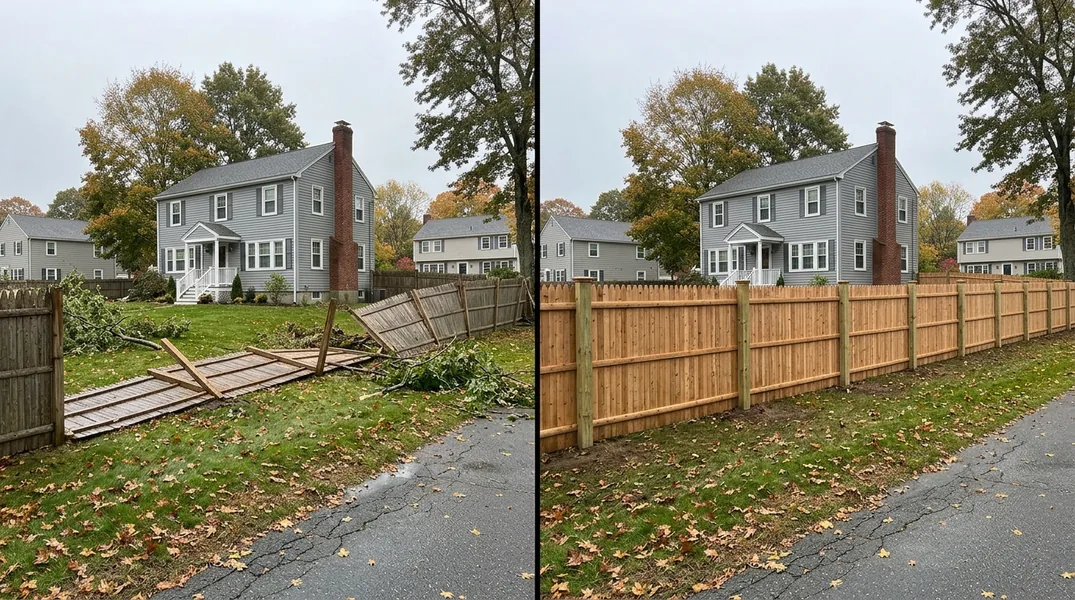
Nor'easters and severe wind push fences over on their fence line, snap posts at grade, and tear panels loose. When that happens, a fence rebuilt should come back stronger than the one that failed. We provide a free damage assessment, photograph the damage section by section, and give you a written estimate you can submit to your insurance carrier. We help you document what happened so your carrier has the information they need to make a coverage decision. Coverage itself is between you and your insurer, and coverage decisions rest with them.
Storm damage is urgent, but we do not pressure you into work you have not decided on. We also do not offer to waive or absorb any part of your deductible. What we do is give you clear photographs, a detailed estimate, and honest guidance on whether repair or replacement makes sense for the sections that were hit. Call (857) 767-9232 after a storm, and we will come out and assess what you are dealing with. See our storm damage fence repair page for more.
Cedar, Pine, Vinyl or Chain Link: Choosing for This Climate
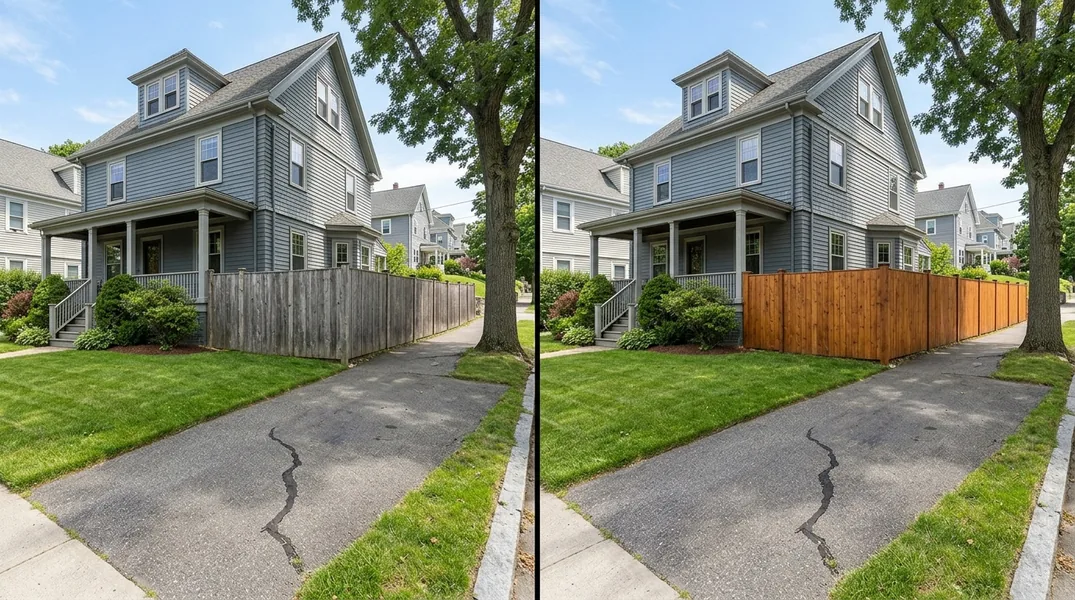
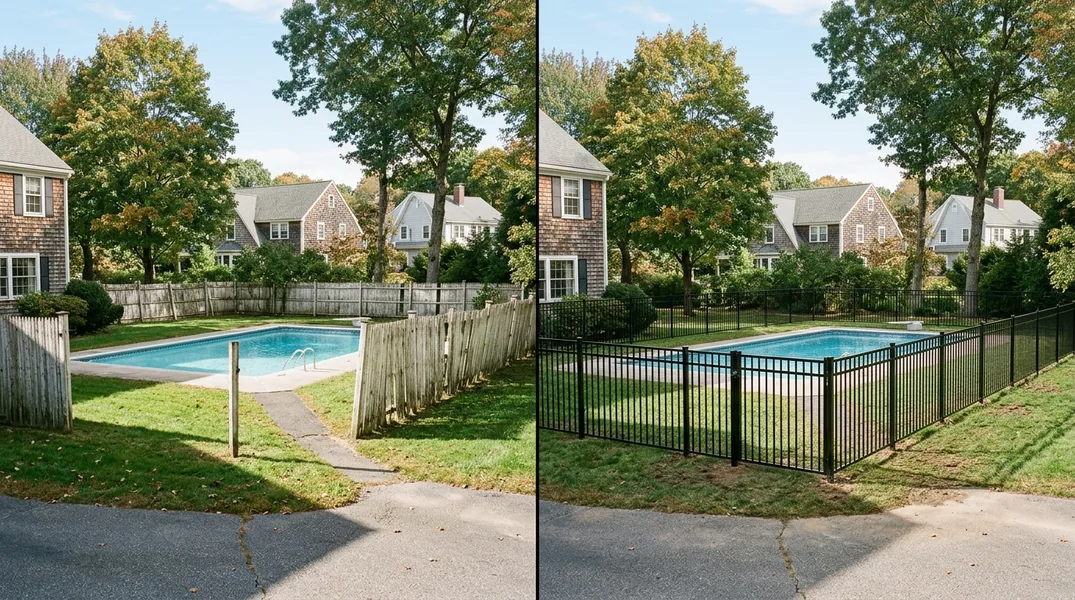
Choosing a fence material here comes down to maintenance, budget, and how long you want it to last. Cedar is beautiful and weathers to silver, but under Boston humidity it needs cleaning and re-staining every two to three years if you want it to stay that way. That cycle is what decides whether a cedar fence lasts closer to ten years or closer to twenty. Pressure-treated pine is the budget alternative: it is tougher than cedar in wet ground, and it costs less, but it does not have cedar's appearance and still needs maintenance. Vinyl is low-maintenance and does not rot, and it is the right choice for many yards, but it can flex in wind and does not look like wood if that matters to you. Chain link is the strongest per dollar you can spend, and gauge and mesh size determine how it performs: a six-gauge galvanized fence is built to last, and black powder-coated chain link looks better than bare galvanized if appearance is a factor. Aluminum and ornamental iron work best for pools and front yards where racking to follow grade matters and where a classical look is worth the investment.
Estimates are quoted by the linear foot and done on site, because slope, access, existing tear-out, and gate count all change the number. See our pricing page for a sense of range, then call for an estimate tailored to your property.
Permits, HOA Rules, Property Lines & Pool Barriers
Fence height, setback, and material rules are set by city and county, and they vary across Greater Boston. In most jurisdictions, residential fences are permitted at a certain height in the backyard and a lower height in the front, but requirements differ, and some cities require a permit before work starts while others do not. Many communities have corner-visibility rules that affect fences near intersections. If your property is in a master-planned community or under deed restrictions, your HOA likely governs fence height, material, and color, and architectural approval is usually required before you start. It is worth checking your deed and your HOA rules first, and confirming them in writing with your HOA before ordering materials. For property lines, we install on the line you identify, working from your existing survey or plat. Determining a boundary is the work of a licensed land surveyor, and if there is any question about where your line lies, a surveyor is the right person to call. Confirm the line and any neighbor or association consent in writing before we start digging.
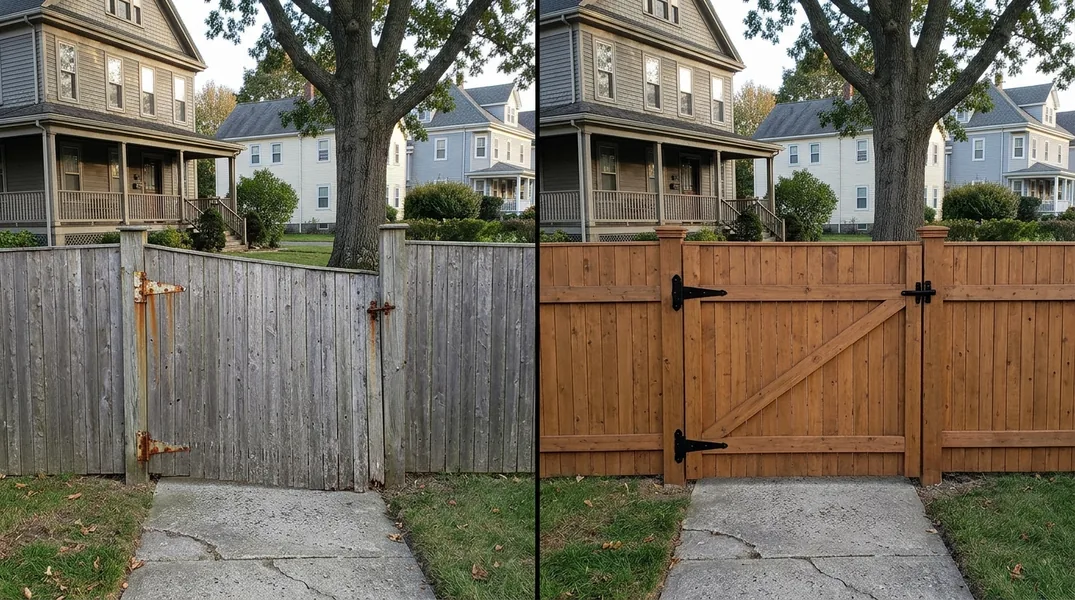
Pool fencing is installed to meet the pool barrier codes that apply at your address, with self-closing self-latching hardware. No barrier replaces supervision of children or swimmers. Setting posts is excavation, and we request Massachusetts 811 utility locates before digging any holes. Locates cover participating utility operators only and do not mark private lines such as irrigation or landscape lighting, so please tell us about any private lines on your property. Requirements vary, and they change, always verify with the Boston building department and your HOA before starting your project. Call for a free estimate and we can discuss what applies to your address.
Ready to get started? Boston Fence serves in Boston and surrounding areas. Book your free on-site estimate today.
Get Your Free Estimate