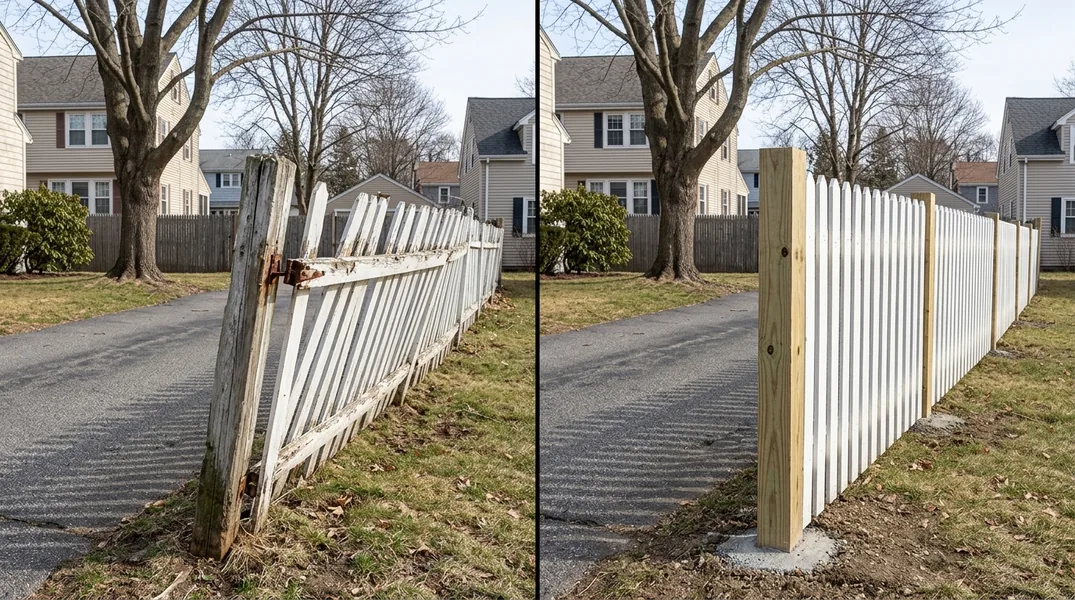
Understanding Frost Heave: Why Your Fence Posts Are Moving
If you own a home in Boston, you've probably noticed that fences don't always stay perfectly vertical. One of the most common culprits behind leaning fence posts is a phenomenon called frost heave. This natural process occurs when moisture in the soil freezes and expands during winter months, pushing fence posts upward and outward. For homeowners in the Northeast, frost heave is an unavoidable seasonal challenge that affects even the most professionally installed fences.
Frost heave happens because New England's freeze-thaw cycles are particularly aggressive. Water in the soil around your fence posts freezes, expands, and creates pressure that lifts the post. When spring arrives and the ground thaws, the post doesn't always settle back into its original position. Over multiple winters, this repeated lifting gradually tilts posts away from vertical, creating the characteristic lean that many Boston homeowners experience. The problem worsens with each passing year if left unaddressed, eventually compromising the structural integrity of your entire fence.
Rocky Glacial Soil: Boston's Unique Fence Challenge
Boston's soil composition presents a unique challenge for fence installation and maintenance. The region sits on glacial deposits left behind by ice age glaciers, which means the soil is filled with rocks, clay, and unpredictable layers. This rocky glacial soil doesn't drain water as uniformly as sandy or loamy soil found in other regions. Instead, water tends to collect around fence posts in pockets, creating ideal conditions for frost heave to develop. When you combine Boston's harsh winters with this problematic soil composition, fence posts face constant pressure from expanding ice.
The rocky nature of the soil also makes proper post installation more difficult. When contractors dig post holes in glacial soil, they often encounter large rocks that prevent posts from being set at the ideal depth. Shallow posts are more susceptible to frost heave damage. Additionally, the poor drainage characteristics of Boston's soil mean that water accumulates around the base of posts, increasing the moisture content that will freeze and expand during winter. Understanding this geological reality is the first step toward implementing lasting solutions for leaning fence repair and prevention.
Rotted Fence Posts: When Frost Heave Isn't Your Only Problem
While frost heave is the primary cause of leaning fences in Newton and surrounding areas, water damage and rot compound the problem significantly. When posts are constantly exposed to moisture from poor drainage and seasonal freezing, the wood begins to deteriorate. Wood & Privacy Fence Installation requires careful attention to post material and maintenance precisely because wood is vulnerable to rot in Boston's damp climate. Posts that have begun to rot lose structural strength, making them more likely to lean, crack, or fail entirely.
The connection between frost heave and rotted posts creates a vicious cycle. Frost heave pressure stresses the wood fibers, causing micro-cracks that allow water penetration. This water accelerates rot, which weakens the post further. A post that might have withstood years of frost heave pressure can suddenly fail when rot has compromised its integrity. This is why professional inspection and rotted fence post repair are so important. A qualified fence contractor can identify posts that are both heaving and rotting, and recommend the most effective repair strategy before complete failure occurs.
Frost Heave Fence Posts: Professional Repair Solutions
Addressing frost heave fence posts requires more than simply pushing the post back upright. Temporary fixes like bracing or adjusting the post may look good initially, but they don't solve the underlying problem. The frost heave pressure will return the following winter, and the post will lean again. Professional repair involves either resetting the post deeper into the ground (if possible given soil conditions), improving drainage around the post, or replacing the post entirely with one installed using frost-proof techniques.
One effective solution is installing posts below the frost line, which varies by region but is typically around 3 to 4 feet deep in Boston. Posts set below the frost line are less affected by seasonal freezing and thawing. Another approach involves improving drainage by grading the soil away from posts and installing gravel or drainage systems that direct water away from the fence. For posts that have already been damaged or rotted, replacement is often the most reliable option. Boston Fence specialists can assess your specific situation and recommend whether repair, reset, or replacement makes the most sense for your fence and budget.
Fence Post Repair Near Me: When to Call a Professional
Many homeowners attempt to fix leaning fences themselves, but DIY repairs often fail to address the root cause and may create new problems. If your fence is leaning noticeably or if posts are cracked, split, or showing signs of rot, it's time to call a professional. Boston Fence has served homeowners throughout the region for years, helping them understand their fence problems and implement lasting solutions. A professional inspection can identify whether your issue is frost heave, rot, poor drainage, or a combination of factors.
The cost of professional fence post repair varies depending on the extent of damage, the number of posts affected, and the repair method chosen. Some posts may only need resetting or bracing, while others require complete replacement. Getting a free estimate from Boston Fence is the best way to understand what your specific fence needs. Call us at (857) 767-9232 to schedule an inspection and receive a detailed assessment of your fence condition and repair options.
Preventing Future Frost Heave: Long-Term Fence Protection
The best approach to frost heave problems is prevention. If you're planning new Wood & Privacy Fence Installation or replacing damaged sections, specify installation methods that account for Boston's climate and soil conditions. This includes deeper post holes, proper drainage, concrete footings that extend below the frost line, and strategic use of gravel or drainage materials around post bases. Quality installation costs more upfront but saves money by preventing expensive repairs down the road.
Regular maintenance also helps prevent frost heave damage from worsening. Inspect your fence each spring after the frost season ends, looking for new leans, cracks, or signs of rot. Grade the soil around posts to direct water away from the fence line. If you notice problems early, repairs are simpler and less expensive. For homeowners in Brookline and other Boston-area communities, working with an experienced local contractor who understands regional challenges is invaluable. Boston Fence combines local knowledge with professional expertise to help your fence withstand New England winters year after year. Contact us today at (857) 767-9232 or visit our website for more information about protecting your fence investment.
Looking for a professional fence contractor in Boston? Boston Fence responds fast for all your fence needs.
Get a Free Quote